
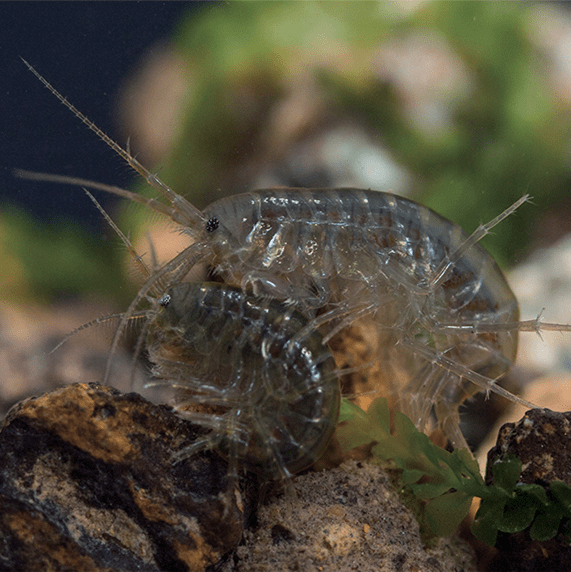
One thousand, two hundred and fifteen years ago, upon the slope of a volcano in the Aomori prefecture of Japan, a shrine was built. Beside that shrine, a small pool was made from a natural spring, providing a water source for visitors to the shrine and their horses. These features would be cared for and maintained by generations of Shinto practitioners for hundreds of years, all the way to the modern day, and in doing so they provided an extraordinary sanctuary. Unbeknownst to them, those conservators were charged with the protection of a tiny shrimp, kept safe in that protected pool while the landscape changed around them. Today, the only place in all the world that shrimp is known to live is a few square metres of water, in the shallow pool built around that spring beside the shrine on the side of a volcano in Japan.
Past
Amphipods are shrimpy crustaceans numbering around 10 000 described species and many more besides. Of the great number of genera, Jesogammarus is the most numerous freshwater group in Japan, diversifying as the volcanism and mountainous topography fragmented and isolated populations in a myriad of little lakes, pools and streams (as has been documented in insects). The genus is found across Japan, mainland China and the Korean peninsula, though its closest relatives, Ramellogammarus, are found on the other side of the North Atlantic.
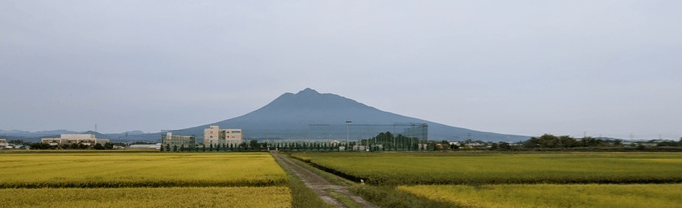
Mount Iwaki is an extinct volcano which stands tall over the Tsugaru Plain of Aomori Prefecture in northern Japan. Its local cultural significance, established under the 300-year influence of the Tsugaru samurai clan, is well worth exploring. The mountain’s three peaks are considered shintai, the physical embodiment of kami spirits in the Shinto religion, and are given their own names: Iwaki-san, Ganki-san and Chokai-san. Mount Iwaki is steeped in stories and folklore, to the point that its written name differs when referring to its treacherous north side, using the character for demon (oni, ki) instead of the more usual one which denotes a tree. This reflects the traditional association of this mountain face with onigami (demons or otherworldly beings from Shinto culture), in particular a class of mysterious mountain beings called yamaudoun. Itako, spirit-communers traditionally wed to Shinto deities and who practised the traditional storytelling art of sekkyōbushi, would recount a story set at Mount Iwaki called Sanshōdayū. The story goes that two siblings embarking to find their father, exiled by the unrelenting lord of Iwaki, were kidnapped into slavery by the titular antagonist. The elder sister Anjuhime helped her brother Zushiomaru to escape but was herself killed. Spurred by the wealth of familial incentives, the brother would reach the courts of Kyoto, have his father pardoned and ultimately wreak vengeance on Sanshōdayū to become the new lord of Iwaki. Local versions of the story, called O-Iwakisama ichidaiki,have Anjuhime survive and ultimately become the deity of Mount Iwaki. This rich local significance spurred pilgrimages to the mountaintop, inspiring the construction of Haguro Shrine in 807AD and a millennium of committed care.
dperkins.org
Present
In December 2020, a group of researchers took a few shrimp from the tiny pool of water fed by the spring at Haguro Shrine. Carefully viewing their anatomy and comparing with close relatives, the researchers discovered that their leggy treasures belonged to a species unknown to science. They named it Jesogammarus acalceolus after a curious anatomical feature which sets these amphipods apart: Jesogammarus amphipods usually have an appendage called a calceolus, a sensory organ found on the male’s antenna, the purpose of which isn’t exactly understood. J. acalceolus is the first member of its genus to completely and permanently lack this organ, a trait so bizarre it requires the very definition of its genus to be rewritten! It should be hoped, then, that the organ’s purpose isn’t entirely crucial… The winning theory so far is that it is used by males to sense the moulting interval and therefore impending egg laying by the female. J. acalceolus evidently gets by alright without this sex-th sense.
Tomikawa & Kimura 2021
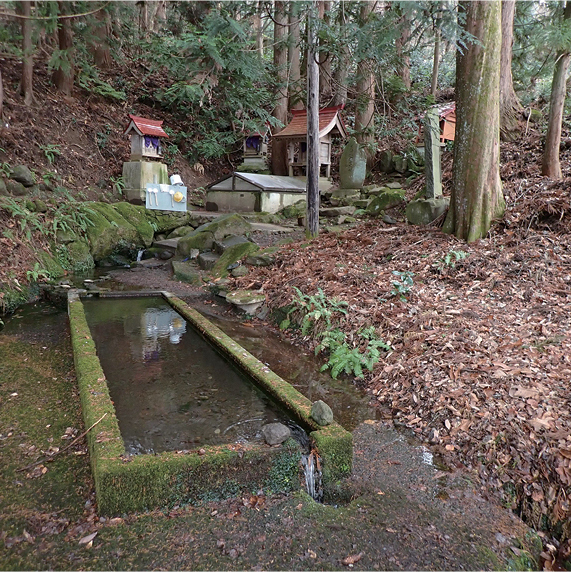
An intensive survey of more than 400 sites was conducted around Aomori Prefecture, with J. acalceolus found in just the one small spring. This constricts the species’ global range entirely to those few square metres of water at Haguro Shrine. By extension, that shrine and the generations of people who have diligently cared for it are entirely responsible for the continued existence of J. acalceolus; this tiny crustacean exists on Earth because of 1200 years of committed work to preserve a diminutive puddle fed by an unassuming little brooklet on the side of a mountain.
Tomikawa & Kimura 2021
Future
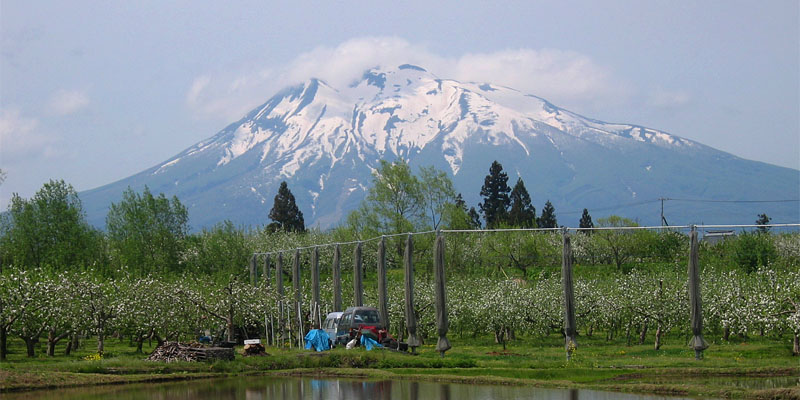
Despite its long history, the quality of the spring pool is at risk, and that means the copepods are too. Mount Iwaki lies beside the city of Hirosaki, putting it in danger of encroaching urbanisation, particularly by industrial apple orchards for which the area is known and which have already claimed many pools and rivulets in the area. It is possible that J. acalceolus could once be found in many pools but that these habitat oases have been built over, drained or polluted. Copepods are particularly sensitive to chemical pollutants and changes in water quality, putting the unique Haguro Shrine copepods on the precipice of disaster, trapped as they are in their single small sanctum. Given their low dispersal ability due to their small size and need for waterways to move through, it’s unlikely J. acalceolus would be able to naturally move to any other pools even if some became available. The shrine has been a lifeline for these crustaceans, possibly for hundreds of years, and if they are to have any hope of surviving that same tradition of maintaining the shrine (and perhaps the folklore which inspires it) must continue for a long time more.
ak15 / Wikipedia
Japan’s near tectonic future should see a brief north-east squeeze between the sturdy Japan Sea and continental trenches approaching from the east, before tectonic spreading further south eases the pressure. Projecting further into the future is rife with unpredictability but this fascinating map looking 50 million years into the future suggests Japan will see little geographic change for many millions of years, spelling fantastic endemism. Another possible forecast nestled in this comprehensive orogenic review by Taira 2001 suggests that, should Japan eventually collide with mainland East Asia, it could press up as an eastern equivalent to the Rocky Mountains of North America, pushing those peaks even higher and mixing up the region’s amphipod diversity with a wave of mainland cousins. The shrine and its spring pool will be very, very long gone, but maybe Mount Iwaki’s future descendants will host their own lineage-defining shrimp, with or without a calceolus.
References
Kaneko N. 1997. The spatial structure of mountain religion: the case of Mt. Iwaki, Japanese Journal of Human Geography, 49(4), pp. 311-330 | Link
Liscutin N. 2000. Mapping the Sacred Body: Shinto versus popular beliefs at Mt. Iwaki in Tsugaru. In: Breen J & Teeuwen M (eds.). Shinto in History: Ways of the Kami. Abingdon, UK & New York, NY, USA: Rootledge, pp. 186-203 (and beyond) | Preview Link
Scotese CR. 2015. Map of plate tectonics 50 million years in the future | Link
Taira A. 2001. Tectonic evolution of the Japanese island arc system, Annual Review of Earth and Planetary Sciences, 29, pp. 109-134 | Link
Takahashi M. 2006. Tectonic development of the Japanese Islands controlled by Philippine Sea plate motion, Journal of Geography, 115(1), pp. 116-123 | Link
Tojo K, Sekiné K, Takenaka M, Isaka Y, Komak S, Suzuki T & Schoville SD. 2017. Species diversity of insects in Japan: their origins and diversification processes, Entomological Science, 20(1), pp. 357-381 | Link
Tomikawa K & Kimura N. 2021. On the brink of extinction: a new freshwater amphipod Jesogammarus acacleolus (Anisogammaridae) from Japan, ZooKeys, 1065, pp. 81-100 | Link
 Novel Ecology
This was very interesting and an enjoyable read ♡. I especially enjoyed the image caption on the shrimp photo. Thank you for enlightening me on these sweet lil aquatic bugs
LikeLike
Pingback: The Fitoaty, Madagascar’s Shadow Cat – Novel Ecology