

With a range ringing around the north pole, a denizen of the Arctic and a holdover from ice ages passed, the reindeer (or caribou in North America) is the world’s most northern deer species. Though famed for pulling Father Christmas’ sleigh across the sky, reindeer’s true powers lie in their adaptability in harsh habitat. Whilst some populations live deep in boreal forest, most tough it out in the open tundra, an environment too harsh for most animals their size but where the resilient reindeer thrives.
But these magical beasts are now facing the most rapid climate change the species has ever known, in the part of the Earth which is warming the fastest. While those populations which live among the forests are threatened by human encroachment, the ones of the open steppes are up against changing flora, extreme weather and the resurgence of an ancient enemy: ice.

Past
The recent evolutionary history of the reindeer is a mess, a story of populations pushed back by encroaching ice sheets, fractured across the northern continents, brought back together by land bridges and receding ice, scattered across islands and between forests. There is no clear consensus on the number of reindeer subspecies: 12 is the most widely accepted number, canonised in the authoritative Mammals of the World, but the IUCN laments its basis on outdated concepts. Whilst this is already a lot of subspecies for a large mammal like a reindeer, it’s alarming to remember there are extinct ones too, and that COSEWIC (a Canadian endangered species advisory committee) found 12 ‘distinct evolutionary units’ of caribou within Canada alone.
I always like to find research professionals getting worked up about things, and the matter of reindeer taxonomy is no exception. It was with some delight that I stumbled on Geist being very angry at taxonomists, focusing on a paper by Banfield from 40 years prior which was already fairly outdated. Talking about using visual clues to distinguish caribou from a distance, Geist includes the wonderfully scathing line:
“Secondly, [Banfield] may not have an “eye” for details in a picture-plane… I am aware of this difficulty in individuals with minimal artistic talent or training”
… which seems comically personal. In his defence, Geist makes some good (if controversial) points about reindeer morphology being very variable under different environmental conditions, about sexually-selected characteristics as indicators of subspecies distinction and about the woodland caribou being much rarer than recognised because lots of the wrong populations are being assigned to it. This just goes to illustrate the difficulty and importance in forming some cohesive picture of the many distinct populations of reindeer. Sometimes, it’s easier to consider this species in terms of ecotypes, groups defined not by their genetics but by their habits and habitat. There are a few even of these, but the biggest distinction lies in the woodland or taiga populations and those which roam the tundra (including Arctic island populations, which are often grouped on their own). Climate change is especially dangerous to the tundra animals, which is where I’m going to focus my attention.
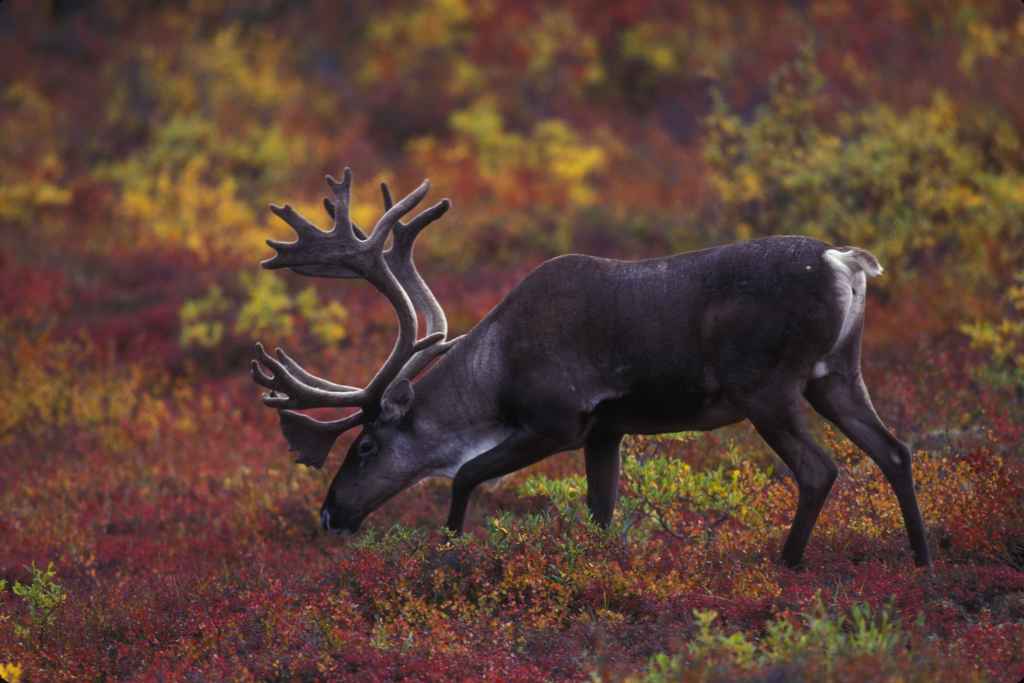
Bauer, Erwin & Peggy | US Fish & Wildlife Service via Wikimedia
The reindeer of the tundra feed on a good range of plants during the summer, from sedges and grasses to the odd shrub and sapling that tries to pop up, switching to rely more on grasses and mushrooms in the autumn. During the winter months, plant matter is even harder to find and their diet switches to rely heavily on hardy lichens, an unusual habit only seen in only one other ruminant: the Siberian musk deer. This seasonal change is so extreme that the reindeers’ anatomy has to alter to accommodate it, their gastrointenstinal tract becoming physically larger, particularly in part of the intestine called the cecum used for fermenting tough vegetable matter. Their gut microbiota also alters to help digest plant fibre. Protein becomes harder to come by, and the deer instead eat more energy-rich carbohydrates which help keep them warm. These changes are especially large in Svalbard reindeer, a small subspecies living in perhaps the harshest environment these animals can withstand, unable to migrate to finer pastures and evolved to endure the very worst by living off fatty deposits built over the summer. (Side note: a population introduced to the South Georgia Islands in the Southern Ocean has an especially odd diet, enjoying a good portion of seaweed and surviving the nutrient-poor winter by picking out Poa flabellata, a native grass unusually high in protein. Remarkable bit of local adaptation there.)
Present
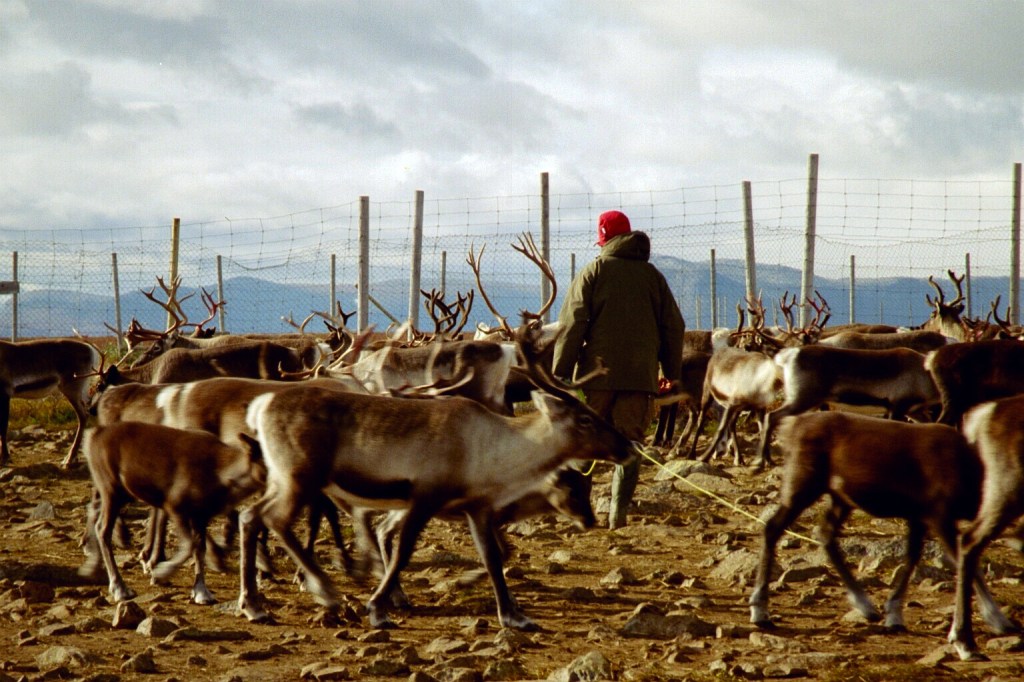
Reindeer today range across much of the Arctic, from the south-west edge of Greenland through most of Canada and Alaska, across the Bering Strait through much of Russia as far south as Mongolia, across Arctic islands like Novaya Zemlya and Svalbard, with pockets in Fennoscandia. Introduced populations exist in Iceland, in a handful of Southern Ocean islands and in a single site in Scotland where the species may be prehistorically native. A substantial portion of the global reindeer population exists in a semi-domesticated state, allowed to roam freely but monitored and harvested mainly by indigenous groups for whom reindeer herding is an ancient cultural practice. It is difficult to understate the importance of these animals to indigenous peoples all over the Arctic; at least 20 different peoples totaling over 100 000 individuals rely on reindeer husbandry as part of their lifestyle across Arctic Eurasia, with presumably similar numbers over North America and Greenland. This way of life is threatened by socio-economic and climate change as much as the reindeer are, yet one could help save the other. I’ll be circling back to this.
As a species, reindeer are considered Vulnerable to extinction by the IUCN. In an animal with so many subspecies and separate populations, this really only means so much: some subspecies are truly struggling, overhunted and feeling the squeeze of advancing human construction. The Peary caribou and woodland caribou are, in particular, in real danger. By contrast, it’s with some irony that the Svalbard reindeer, living in the very harshest environment the species can endure, is actually becoming more common. They were hunted mercilessly in the 19th and early 20th centuries, have enjoyed legal protections for the last hundred years and have now recovered their entire natural range (albeit at lower numbers than before). These protections will do nothing to stop the changing climate though, which doesn’t temper itself with such triviality as law, and global warming will hit the Svalbard reindeer as hard as any other population across the High Arctic (with the dangerous addition that Svalbard is an island, so if the reindeer try to move north ahead of advancing temperatures they will fall into the ocean).

Christopher Michel | Flickr
It might be surprising to hear that climate change brings some good news for the reindeer. Average temperatures are warmer, freezing temperatures arrive later in the year and snow melt happens earlier, effectively shrinking the harsh winter. This means more plant growth for more time and tasty, nutritious new shoots popping up sooner. And this means more food for the reindeer, which can maintain their body weights better, more food for calves born in the spring and a larger supported population. Nutrient-poor mosses and lichens are also replaced by richer vascular plants like grasses and shrubs. Great!
But climate change effects are extremely complicated because different regions are affected in different ways, so many aspects of the system have different sensitivities, all those different plant species will react in different ways, and because we’re talking about the entire Arctic circle here. A review into reindeer forage exemplifies this pretty well with a respectable failure to summarise climate change’s impact on nitrogen content in tundra plants:
“Short- and long-term (<1-10 years) field manipulation experiments with reindeer forage plants show that increased air and/or soil temperature (0.4-5.1oC from 11 weeks to 10 years) either decreases, increases or has no effect on the concentration of nitrogen in grasses, sedges, forbs, willows and birches”
Or in simpler terms: experiments of various lengths, using various temperatures, found that a bunch of different kinds of plants increased or decreased in nitrogen content, or didn’t.
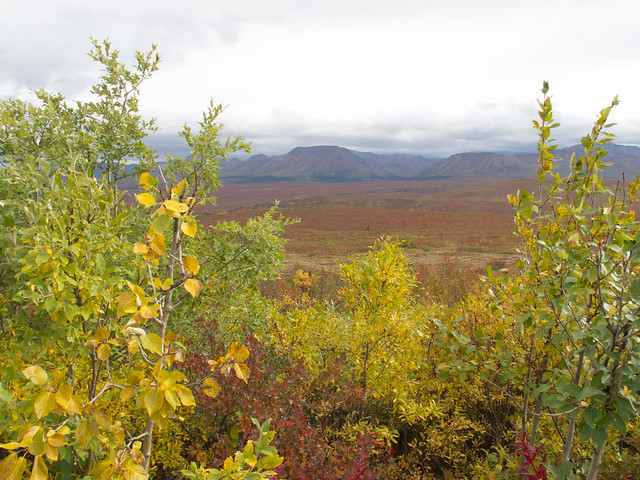
With such complexity in mind, beneficial plant growth is balanced out by a smörgåsbord of local negative effects. We find that lichens recover more poorly from grazing in the warmer temperatures brought on by climate change, so are depleted more quickly. Since lichens have different nutritional properties to other plants, being richer in those carbohydrates which are so important for reindeer keeping warm over the winter, their replacement with forbs may not be good news for northern populations. The more rapid growth of plants also affects their nutritional value, with greater concentrations of carbon compared to important nitrogen, though this is very variable as we’ve seen. At the southern extent of the Arctic tundra, the encroachment of trees and shrubs threatens the open tundra ecosystem and the animals evolved for it. Where reindeer numbers aren’t high enough, the trees spread faster than they can be eaten and serve as an advancing barrier to the deer which depend on open habitat. The new canopy and leaf litter carpet absorb more light than bare snow or lichens, while branching woody bodies form a windbreak. The trees have a local warming effect of their own, melting the soil permafrost, releasing trapped greenhouse gases and irreversibly changing soil conditions to suit themselves.
Andrea Pokrzywinski | Flickr
For many reindeer populations, the even greater danger lies in an increase in extreme weather events brought on by climate change. That means the occasional colder, wetter winter with thicker snowfall which smothers food plants and makes traversing the open tundra much harder, which can delay or lengthen migrations. The other extreme may be more troubling though; counter-intuitively, milder winters are very scary for reindeer because they set the stage for their Palaeolithic nemesis: ice. Milder, wetter stints during the winter melt surface snow, which can then refreeze as a layer of ice over the invaluable lichens and plants needed to sustain the reindeer. A warmer, wetter climate also brings rain, which falls to the still-frozen ground and becomes an impenetrable ice barrier. Cut off from their food source, the reindeer starve. Mortality skyrockets and a generation of calves are stillborn or die young as their mothers fail to gather the nutrients needed to provide milk. It can take seven whole years for the population to recover from a bad rain-on-snow winter.
Bring all this change together and the picture is bleaker than the sum of its parts. Warmer, longer summers mean more plant growth supporting a larger reindeer population. Then an icy winter comes along and suddenly we’ve gone from lots of reindeer and lots of food to lots of reindeer and no food. The bumper summers make for harsher competition in the winter and the limited forage gets snapped up more completely, resulting in an even greater population collapse.
Future
It looks like it’s all bad news for the reindeer; even the good news spells more bad news later on. Though it’s difficult to apply such blanket statements across a region as big as the Arctic, trends are set to continue, with more warming, more tree encroachment, more extreme events and more frequent icing.
But maybe the bad news can turn into good news. Remarkably, having published a paper describing the terrible impacts of icing events on reindeer populations, Hansen authored another warning not to draw conclusions from handfuls of icing events because he had discovered an ecological paradox. Using computer modelling, his research team found that those killer weather phenomena can actually protect populations from extinction. But how can a barrier of ice between deer and their only food source possibly be beneficial? The team found that it took Svalbard reindeer 7 years to fully recover from a population crash, but if another event happened within that time then there’d be fewer reindeer around to fight for the little available food. The reindeer population never rises to the usual carrying capacity (the maximum population the habitat can sustain), so when a bad winter comes round, cutting off the food supply and dropping that carrying capacity, there’s a smaller excess of animals needing to feed and more end up with a tolerable share. The population ticks along at a lower density of animals than before but when it gets hit, it doesn’t fall so far. In fact, the increased frequency of rain-on-snow events that Hansen forecasts for Svalbard will make the local subspecies fifteen thousand times less likely to be driven extinct by extreme weather. It’s crucial to note that the oral histories and traditional knowledge of the Nenet people report that smaller, more mobile herds fare better in harsh winters than larger ones.

Based on Hansen (2007)
But what of the encroachment of shrubs and trees? What of the melting permafrost and the ground-up transformation of entire tundra ecosystems? Ben Rawlence recently wrote an excellent article in the Guardian on this subject, focusing on the hardships of reindeer herders in the Norwegian Arctic. There are no easy answers here, as the trees follow the warming climate, then induce their own local warming, allowing them to spread further. Felling so many trees is an insurmountable task for people without economic incentive to harvest the young birches. Can reindeer play a part? Certainly there is an argument that reindeer grazing might work as a management strategy against the ‘shrubification’ of the High Arctic, stripping back saplings and keeping the tundra open. Woodland is encroaching into regions already patrolled by the deer and their herders but, as the reindeer industry is threatened and declining, there may be room for greater densities of deer to mow the landscape (their numbers managed carefully to avoid the cycles of boom and bust which have plagued wild populations during those ever more common icing events). If reindeer can play a crucial part against woodland encroachment and all the terrible knock-on effects (including greenhouse gas release), perhaps this cultural staple might be seen as more valuable and given a funding boost. It may be speculation, but if reindeer herding is disappearing because it’s no longer financially viable, and maintaining the tundra is economically valuable (as well as ecologically and socially valuable), and the tundra could be managed through increased reindeer herding… it seems like an easy investment. A handful of studies have shown the potential for reindeer to remove tree species such as arctic willow or to halt shrub growth in its tracks. But other researchers point out that high densities of reindeer remove the important mossy layer atop soil and so increase soil temperature through sun exposure, enhance nutrient turnover, add fertilising manure and encourage the growth of vascular plants. In high numbers and without being moved along, reindeer can also deplete lichens, which regrow more slowly than vascular plants, allowing the shrubs and herbs to take over. Semi-domesticated herds would need to be sizeable without swamping and depleting the ecosystem their meant to protect.
Mats Adersson | Flickr via Wikimedia
None of these mechanisms is a guarantee for reindeer safety, and everything is context-dependent. Reindeer herding comes under pressure from climate change and lack of finance but also from industrial encroachment, social change and complications in policy, and each of these things varies from country to country. Reindeer populations are under similar, variable stresses and, as with indigenous cultures, they contain a great deal of difference. Some southerly subspecies of reindeer are adapted for boreal forest, where logging and industry are the main threats. Of the tundra populations, many will migrate to different food sources in winter than in summer, but not all of them do so. Island subspecies such as the Peary caribou and Svalbard reindeer are particularly static, though they will still wander in search of the right food. So having outlined what’s known and expected about reindeer survival under climate change, I have to stress once again that these impacts are very complex. Still, by gathering evidence across populations and looking at the very causes of the changes seen, we can stitch together a rough picture of what reindeer are up against. It looks like a pretty tough future, but these denizens of the Arctic are no pushovers and, with the support of peoples who rely on them, reindeer can once again show how remarkably resilient they can be.
References
Aanes R, Sæther B-E & Øritsland NA. 2008. Fluctuations of an introduced population of Svalbard reindeer: the effects of density dependence and climatic variation, Ecography, 23(4), pp. 437-443 | Link
Albon SD , Irvine RJ, Halvorsen O, Langvatn R, Loe LE, Ropstad E, Veiberg V, van der Wal R, Bjøkvoll EM, Duff EI, Hansen BB, Lee AM, Tveraa T & Stien A.2017. Contrasting effects of summer and winter warming on body mass explain population dynamics in a food-limited Arctic herbivore, Global Change Biology, 23, pp. 1374-1389 | Link
Le Corre M, Dussault C & Côté SD. 2017. Weather conditions and variation in timing of spring and fall migrations of migratory caribou, Journal of Mammalogy, 98(1), pp. 260-271 | Link
Festa-Bianchet M, Ray JC, Boutin S, Côté SD & Gunn A. 2011. Conservation of caribou (Raingifer tarandus) in Canada: an uncertain future, Canadian Journal of Zoology, 89(5), pp. 419-434 | Link
Forbes BC, Kumpula T, Meschtyb N, Laptander R, Macias-Fauria M, Zetterberg P, Verdonen M, Skarin A, Kim K-Y, Boisvert LN, Stroeve JC & Bartsch A. 2016. Sea ice, rain-on-snow and tundra reindeer nomadism in Arctic Russia, Biology Letters, 12, 20160466 | Link
Geist V. 2007. Defining subspecies, invalid taxonomic tools, and the fate of the woodland caribou, Rangifer, Special Issue 17, pp. 25-28 | Link
Grayson DK & Delpech F. 2005. Pleistocene Reindeer and Global Warming, Conservation Biology, 19(2), pp. 557-562 | Link
Gunn A. 2016. Rangifer tarandus, The IUCN Red List of Threatened Species, eT29742A22167140 | Link
Hansen BB, Aanes R, Herfindal I, Kohler J & Sæther B-E. 2011. Climate, icing, and wild arctic reindeer: past relationships and future prospects, Ecology, 92(10), pp. 1917-1923 | Link
Hansen BB, Gamelon M, Albon SD, Lee AM, Stien A, Irvine RJ, Sæther B-E, Loe LE, Ropstad E, Veiberg V & Grøtan V. 2019. More frequent extreme climate events stabilize reindeer population dynamics, Nature Communications, 10, 1616 | Link
Heggberget TM, Gaare E & Ball JP. 2002. Reindeer (Rangifer tarandus) and climate change: importance of winter forage, Rangifer, 22(1), pp. 13-31 | Link
den Herder M, Virtanen R & Roininen H. 2008. Reindeer herbivory reduces willow growth and grouse forage in a forest-tundra ecotone, Basic and Applied Ecology, 9(3), pp. 324-331 | Link
Leader-Williams N, Scott TA & Pratt RM. 1981. Forage selection by introduced reindeer on South Georgia, and its consequences for the flora, Journal of Applied Ecology, 18(1), pp. 83-106 | Link
Magga OH, Mathiesen SD, Corell RW & Anders O. 2009. Reindeer herding, traditional knowledge, adaptation to climate change and loss of grazing land. EALAT project executive summary. Arctic Council and International Centre for Reindeer Husbandry. Fagtrykk Ide AS, Alta | Link
Mathieson SD, Orpin CG, Greenwood Y & Blix AS. 1987. Seasonal changes in the cecal microflora of the high-arctic Svalbard reindeer (Raingifer tarandus platyrhynchus), Applied and Environmental Microbiology, 53(1), pp. 114-118 | Link
Monteath AJ, Gaglioti BV, Edwards ME & Froese D. 2021. Late Pleistocene shrub expansion preceded megafauna turnover and extinctions in eastern Beringia, PNAS, 118(52), e2107977118 | Link
Le Moullec M, Pederson ÅØ, Stien A, Rosvold J & Hansen BB. 2019. A century of conservation: the ongoing recovery of Svalbard reindeer, The Journal of Wildlife Management, 83(8), pp. 1676-1686 | Link
Rawlence B. 2022. ‘The treeline is out of control’: how the climate crisis is turning the Arctic green, The Guardian, 20/01/2022 | Link
Rinke A & Dethloff K. 2008. Simulated circum-Arctic climate changes by the end of the 21st century, Global Planetary Change, 62(1-2), pp. 173-186 | Link
Sommer RS, Fritz U, Seppä H, Ekström J, Persson A & Liljegren R. 2011. When the pond turtle followed the reindeer: effect of the last extreme global warming event on the timing of faunal change in Northern Europe, Global Change Biology, 17(6), pp. 2049-2053 | Link
Turunen M, Soppela P, Kinnunen H, Sutinen M-L & Martz, F. 2009. Does climate change influence the availability and quality of reindeer forage plants?, Polar Biology, 32, pp. 813-832 | Link
Tyler NJC. 2010. Climate, snow, ice, crashes, and declines in populations of reindeer and caribou (Rangifer tarandus L.), Ecological Monographs, 80, pp. 197-219 | Link
Uboni A, Horstkotte T, Kaarlejärvi E, Sévêque A, Stammler F, Olofsson J, Forbes BC & Moen J. 2016. Long-term trends and role of climate in the population dynamics of Eurasian reindeer, PLoS ONE, 11(6), e0158359 | Link
Verma M, Schulte to Bünhe H, Lopes M, Ehrich D, Sokovnina S, Hofhuis SP, Pettorelli N. 2020. Can reindeer husbandry management slow down the shrubification of the Arctic?, Journal of Environmental Management, 267, 110636 | Link
Weladji RB & Holand Ø. 2003. Global climate change and reindeer: effects of winter weather on the autumn weight and growth of calves, Oecologia, 136, pp. 317-323 | Link
Williamsen L, Pigeon G. Mysterud A, Stien A, Forchhammer M & Loe LE. 2019. Keeping cool in the warming Arctic: thermoregulatory behaviour by Svalbard reindeer (Rangifer tarandus platyrhynchus), Canadian Journal of Zoology, 97(12), 1177-1185 | Link
 Novel Ecology